
These free autism printables are picture tools you can print at home or school today: routines, a first-then board, feelings cards, countdown cards and a star chart. Each one is a simple PDF with clear pictures and very few words.
On this page
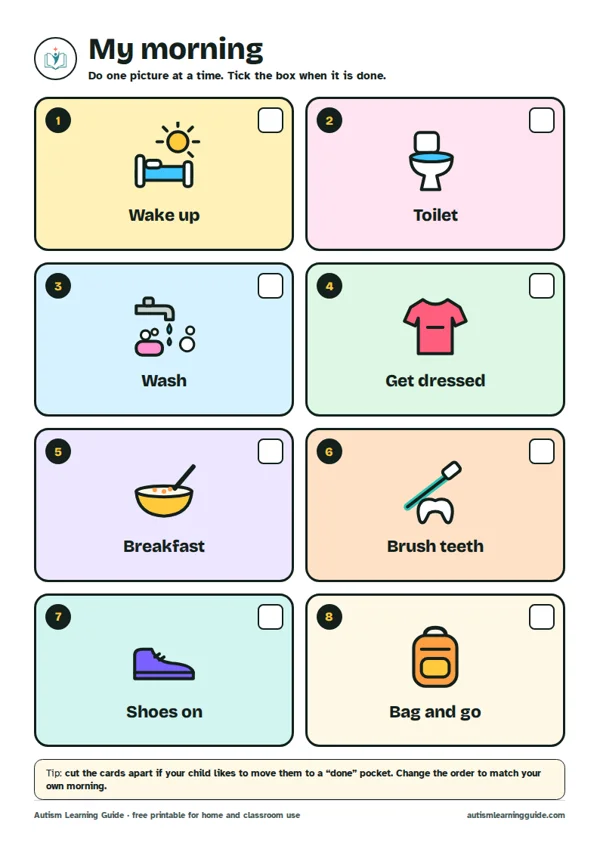
Morning routine
Eight picture steps from waking up to leaving the house, with a tick box for each one.
PDF · 1 page · free
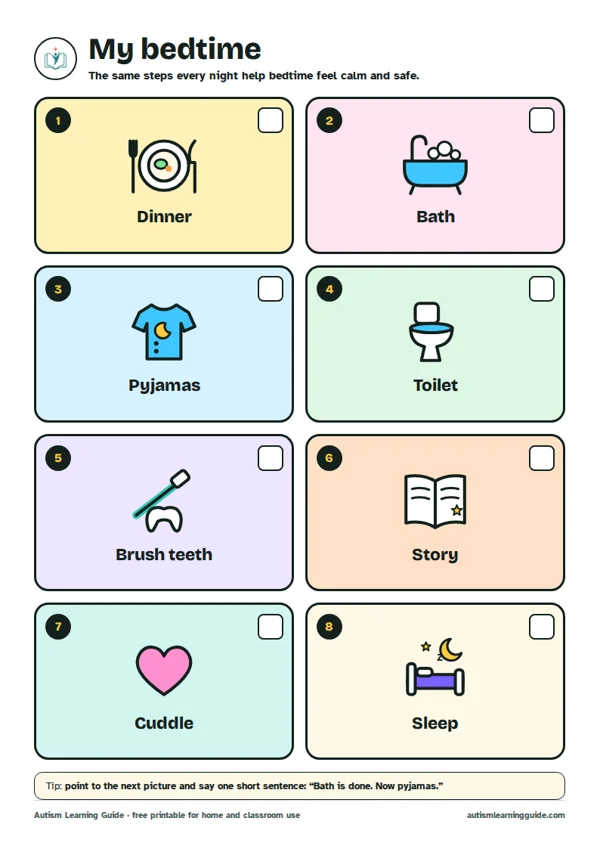
Bedtime routine
Dinner, bath, pyjamas, teeth, story and sleep: the same calm steps every night.
PDF · 1 page · free
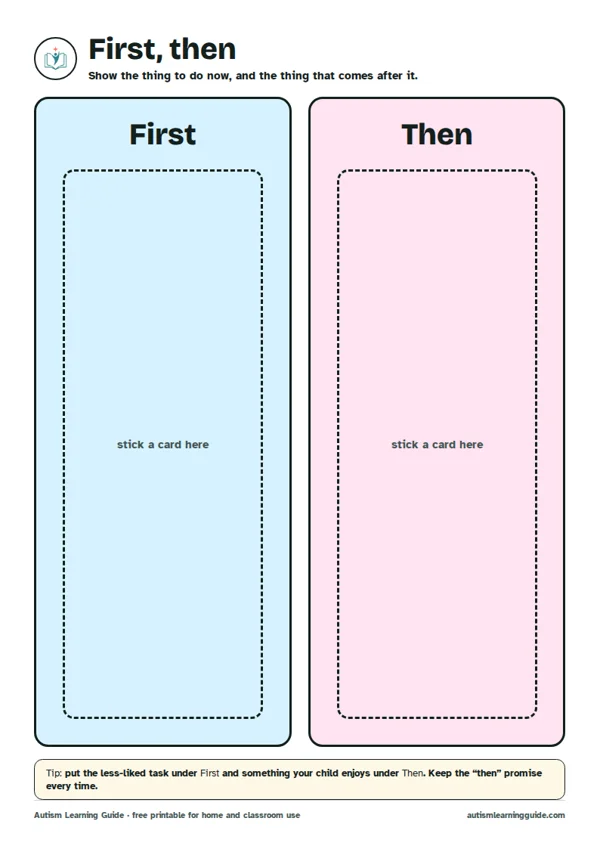
First, then board
A two-box board plus 16 cut-out picture cards for play, snack, park, bath and more.
PDF · 2 pages · free
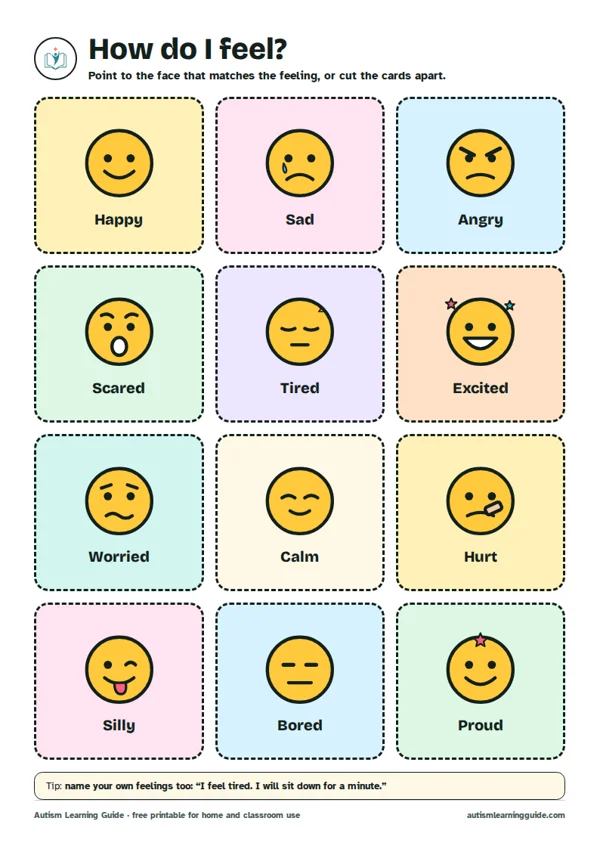
Feelings cards
Twelve simple faces to help your child point to and name how they feel.
PDF · 1 page · free
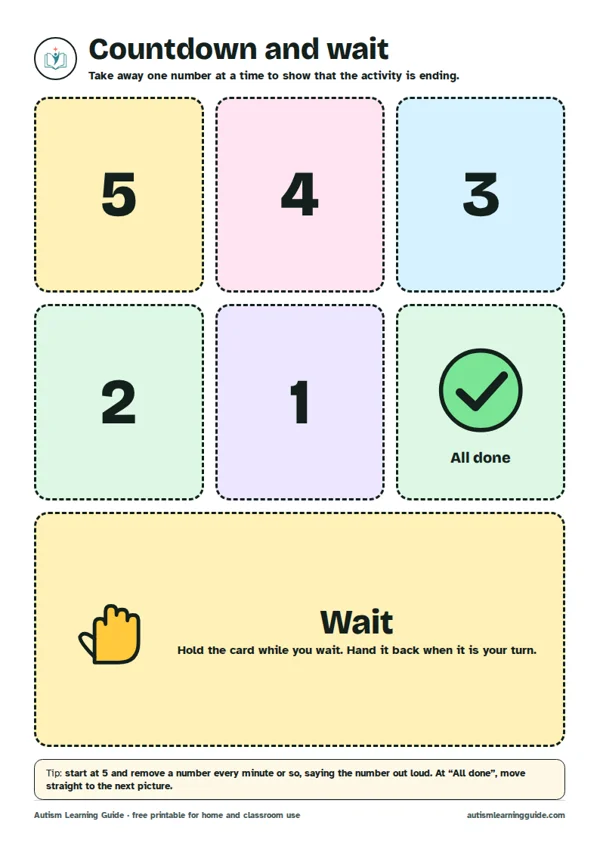
Countdown and wait cards
5-4-3-2-1 cards and a wait card to make the end of an activity easier.
PDF · 1 page · free
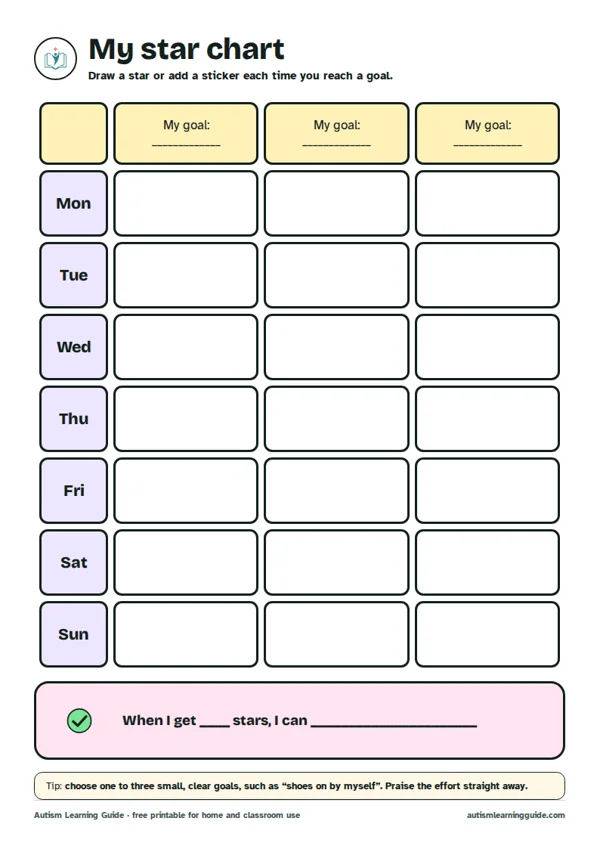
Star chart
A weekly chart for one to three small goals, with a reward box.
PDF · 1 page · free
Why free autism printables help
Many autistic children understand what they see more easily than what they hear. A spoken instruction disappears as soon as it is said, but a picture stays on the wall. Your child can look at it again, at their own pace, as many times as they need. That is why picture tools like these are used so often at home, in nurseries and in schools.
Visual supports are one of the practices with the strongest research behind them. The 2020 National Clearinghouse on Autism Evidence and Practice report reviewed thousands of studies and lists visual supports as an evidence-based practice for autistic children and young people. Our printables are simple, everyday examples of that idea, not a treatment or a programme.
Which printable should I start with?
- Hard mornings or bedtimes: start with the morning or bedtime routine. Use the same order every day for a week before you change anything.
- Trouble stopping one thing and starting another: try the first-then board and the countdown cards together.
- Big feelings that are hard to explain: keep the feelings cards somewhere easy to reach, and use them when everyone is calm, not only during a meltdown.
- Learning a new skill: the star chart works best with one small goal and praise that comes straight away.
Every child is different. If a tool does not suit your child, put it away and try another one later. Your child’s speech and language therapist, occupational therapist or teacher can also help you adapt these free autism printables to your child’s needs.
How to use these printables
- Print and protect: print in colour on thick paper, or laminate the pages so they last.
- Start small: use one tool for one part of the day, such as getting dressed, before adding more.
- Use the same words: point to the picture and say one short sentence, like “First shoes, then park.”
- Make them yours: cut the cards apart, change the order, or draw your own pictures on the back.
Can I print them in black and white? Yes. The pictures have thick outlines, so they still work without colour, and your child can colour them in. If your printer asks, choose “fit to page” so nothing is cut off at the edges.
Not sure where to start? Our guides on visual schedules, helping with transitions and meltdowns explain why picture tools help and how to use them.
Free for personal, family and classroom use. Please share a link to this page rather than the files. More picture tools are on the Visual Tools page.