
Self-Injury in Autism: Causes, Safety and Support for Parents
Head banging, biting and scratching are common in autistic children and usually signal a need. Learn how to rule out pain, find triggers, keep your child safe and get the right support.
Transitions, routines, meltdowns, sleep, mealtimes and outings: calm, practical ideas for everyday family life.
Head banging, biting and scratching are common in autistic children and usually signal a need. Learn how to rule out pain, find triggers, keep your child safe and get the right support.
About half of autistic children try to wander at some point. This calm, evidence-based guide helps you build a layered safety plan for home, water, ID and the first minutes if your child goes missing.
Feeling worn out raising an autistic child? Learn the signs of autism parent burnout, what research shows really helps, how to get respite in the US and UK, and how to support your other children.
Many autistic children want friends but connect in their own way. Learn what research says about autism and friendships, which programs help, and how to support your child without forcing neurotypical norms.
Hitting, kicking or biting is common in autistic children and is usually a sign of distress. Learn why it happens, how to stay safe, and which supports have the best evidence.
Stopping one activity and starting another can be very hard for autistic children. Here is why, and how warnings, visuals, and routines can make everyday and big transitions easier.
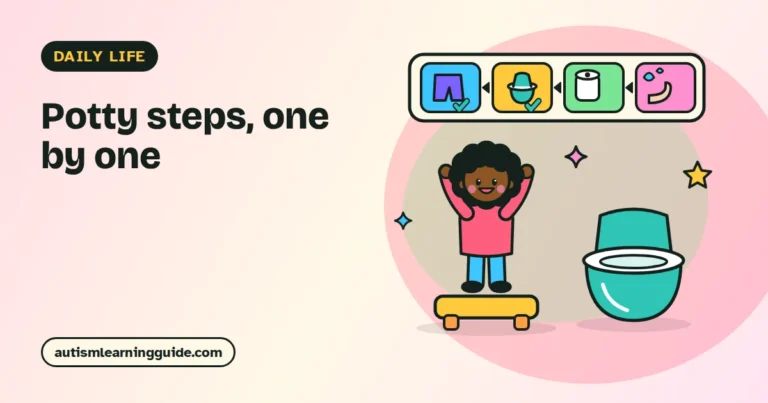
Many autistic children learn to use the toilet later than their peers, and that is OK. A calm, step-by-step plan with visuals, routines, and a check for constipation gives your child the best chance.
Sleep problems are about twice as common in young autistic children. Guidelines recommend starting with routines and behavioral strategies, checking for health causes, and only then considering medicine with a doctor.
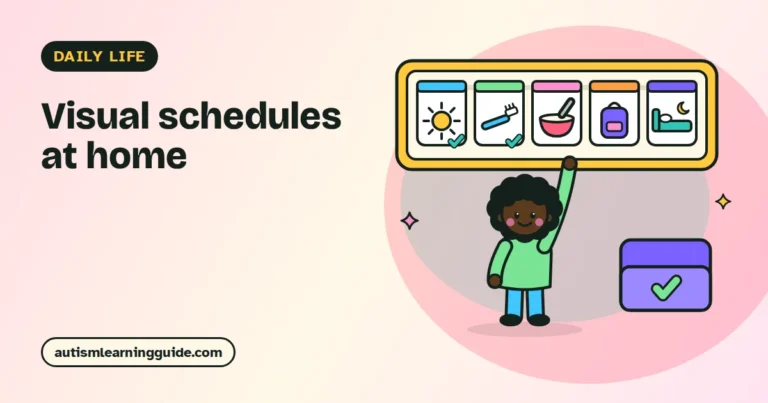
A visual schedule shows your child, in pictures or words, what is happening now and what comes next. Here is what the research says and how to build one that fits your family.
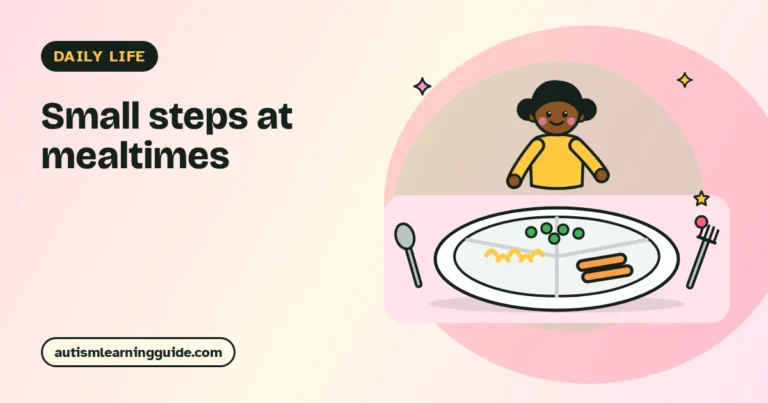
Many autistic children eat a very small range of foods. Here is why it happens, which warning signs need a doctor, and calm, low-pressure ways to widen your child’s diet over time.